Real Estate Investment Strategy, AI Models, & Data Analytics: US Multifamily in April 2026

Participants receive a to-the-moment overview of US multifamily investment trends, gaining the tools to form a cohesive real estate investment perspective. They then explore a cutting-edge AI investment tool and apply it to one of their projects.

Commercial real estate investment professionals must make informed decisions, yet we’re often inundated with meaningless and contradictory information that masquerades as “data.” This program will equip you with the tools to develop an integrated real estate investment perspective that enables action and, most importantly, yields better results.

Taught by a real estate economist and data expert, both new and experienced real estate investors will learn to utilize technology (including a cutting-edge AI tool), proprietary data, and a proven framework to develop a cohesive strategy, enhance decision-making, and optimize investment outcomes. Participants will explore real deals closed in the tricky contemporary financing environment and be challenged to apply AI-powered insights to their own projects.

What to Expect

This program is built on the data and results that fuel commercial real estate investment strategies and execution. It is explicitly designed to clear out the noise and zero in on the fundamental drivers of US multifamily real estate value, both core and niche play, and then create a range of strategies responsive to both market conditions and your selected capital expectations to execute on the creation of value.

After covering Macroeconomic drivers as well as factors driving the US housing market, we’ll work on how to select potential investment opportunities and use conventional financial models alongside AI queries to underwrite a deal in a multifamily investment case study from a past program participant. When interacting with a proprietary AI investment analysis model, the task will be to verify or refute the LLM’s (large language model) conclusions, applying the best practice real estate investment factors learned in the early sessions.

We’ll cover global and US-specific macroeconomics, financial market conditions, the drivers of wealth creation in any given society and the role of “place” in it, demographics (both the aging of the population and the impact of domestic migration and immigration), de-globalization and its implications, the dynamics and measurement of regional, local, and neighborhood economies, and then the identification of specific assets most likely to align with the resulting investment strategy (provided in a voluntary additional working session). 

Domestic Migration patterns, accelerated by COVID and the redefinition of where “office work” is or can be performed for many workers, have reshaped whole regions and metropolitan areas within them, and even housing markets that had previously been considered too small for non-local investors are now emerging as the new frontier of investable markets. 

We will avoid the hype, examine the reality, and the lasting implications of what’s been occurring in areas including:

  • Inflation – We’ll cover the sources of inflation (money supply growth, US Federal Government deficits, the disruption of transportation, goods, labor, food, and energy markets), the resulting Federal Reserve interest rate response, and the interaction of short- and long-term interest rates in its eventual control. We’ll cover the interaction of these with real estate income and valuation.
  • The Trump Administration’s Policy Mix, along with remaining impacts of the CHIPS Act, Inflation Reduction Act, Re-Industrialization, and Domestic Growth Markets – We’ll examine the trajectory of the Administration’s policies and assess their impact in fostering re-industrialization in previously overlooked markets. 
  • Public Policy Responses to Housing Affordability – We’ll review the varied policy responses to housing affordability concerns, from embracing market-driven development to policies enabling rent control and their impact on local markets, including the impact of the New York mayoral race on the New York market.

Finally, we’ll cover a range of investment strategies, including CORE, Value Add, Distress (and near-distress), as well as the Development decision and how and when to pivot between strategies. We will draw from proprietary data sets as well as a compilation of existing publicly available data.

  • Learn how to leverage a cutting-edge AI tool in your real estate investment decision-making process
  • Learn the demographic demand trends in housing- age, marital trends, education, job formation, wealth creation, domestic and international immigration- and where to source the data to demonstrate it.
  • Understand de-globalization and the implications for which real estate is now more valuable. 
  • Explore COVID-19-accelerated domestic migration patterns and the changing nature of “office” work.
  • Learn how inflation – its sources & implications- (money supply growth, disruption of transportation, goods, labor, food, and energy markets), as well as the resulting Federal Reserve interest rate response, impacts real estate investment strategy
  • Understand market and asset identification strategies leveraging commercially available datasets, answering questions such as:
    • What makes a regional/local economy “tick,” and where is activity concentrated? 
    • What is the source of wealth creation in society & which type of “places” increase in value? 
    • Local demand/supply balances – leveraging future supply pipeline data vs. estimated demand 
    • Leveraging data on market fundamentals – rent, occupancy, supply, sales, expenses, cap rates, capital expenditures 
    • Societal trends in the disposition of purchasing power 
    • Which assets & locations are best positioned to take advantage of these drivers?
  • Understand the macroeconomic & cost of capital context, including inflation/deflation
  • Explore how emerging trends, public policy responses to housing affordability (from market-based policies to rent control), and the Inflation Reduction Act’s role in shaping US re-industrialization, impact US multifamily investing while also reviewing other niches in rental housing, from international markets to student housing.
  • Established US Real Estate Investors seeking to use data to make better investment decisions, using leading investment models and AI
  • International Real Estate Investors looking to apply trends in US real estate investing to their home markets or enter US markets
  • Investors new to commercial real estate
  • Service providers for real estate investors seeking to understand the “real estate investor perspective”
  • Design, engineering, construction, legal, permitting, financing, marketing, or property management professionals who are members of a real estate development team

Recent Participant Summary
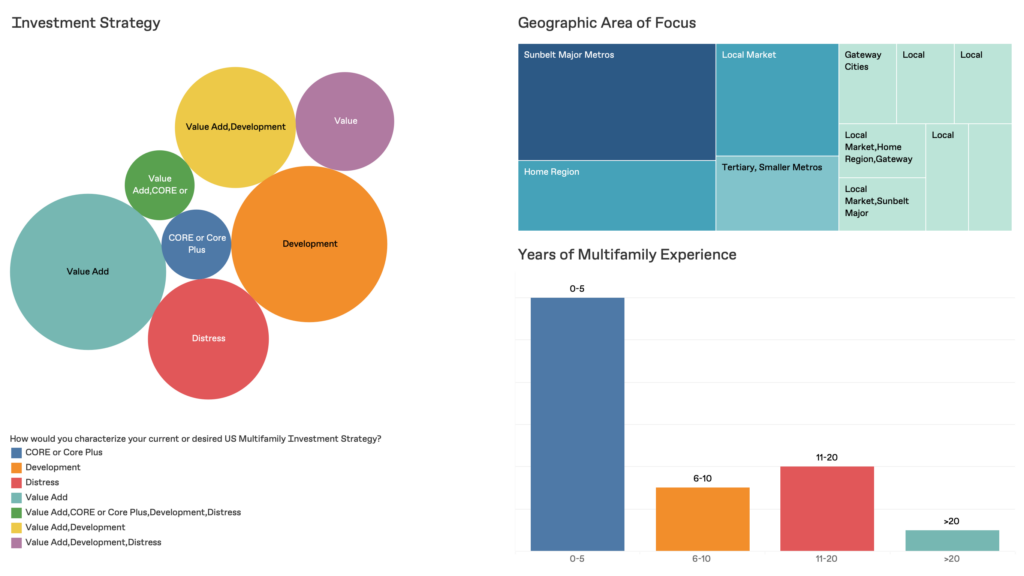
the risk methodology used in this program

Example Framework – Investment Risk/Opportunity Analysis

Below is a redacted version of the proprietary Investment Risk/Opportunity Analysis as presented in December 2023.
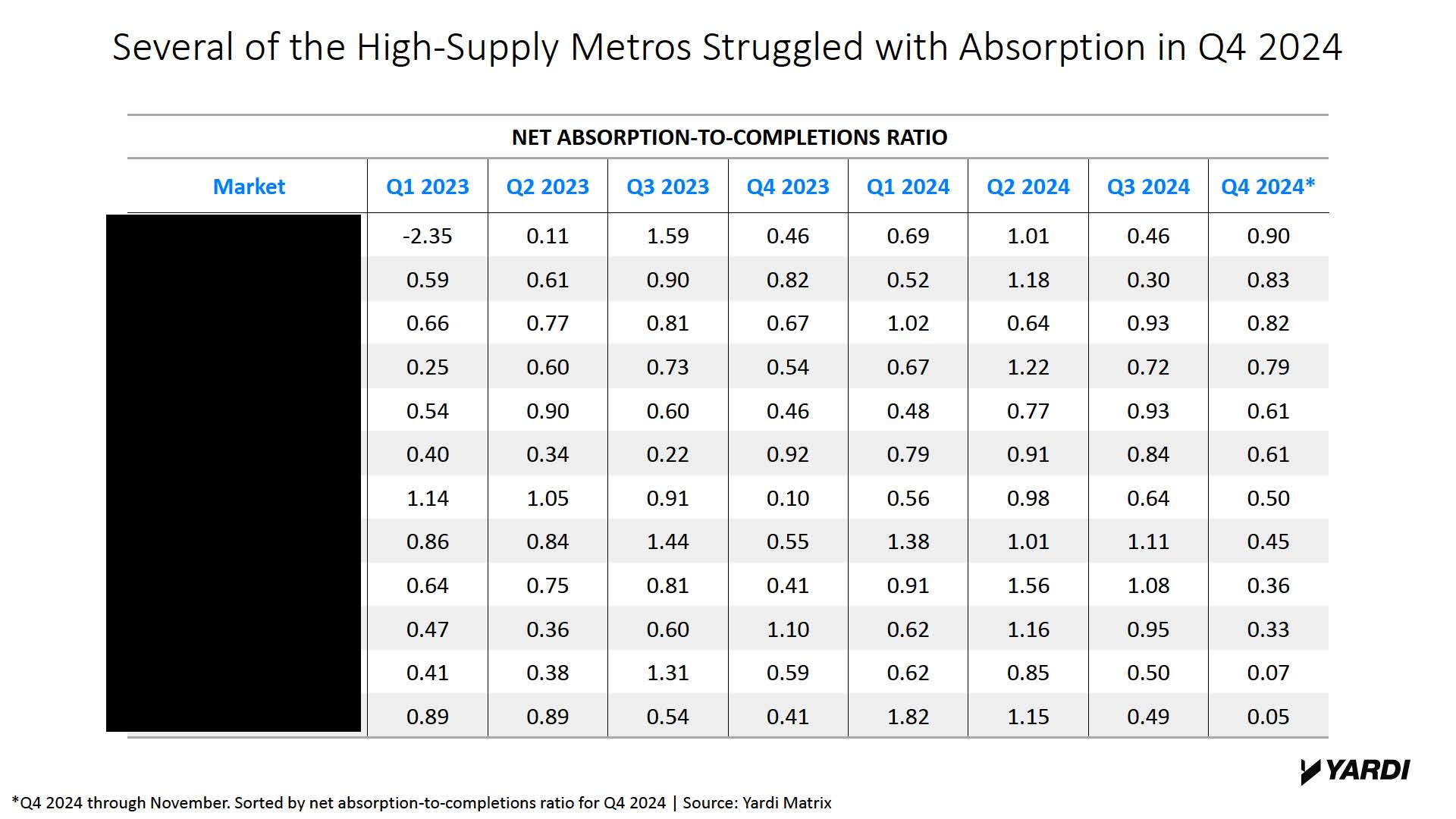
Example Slide – Multifamily Unit Absorption by US Metro

Below is a redacted version of a metropolitan area comparison of multifamily unit absorption, as presented in January 2025.

Instructor


Headshot of Jeff Adler

Jeff Adler

Vice President, Matrix
Yardi Systems, Inc.


Recent Participant Feedback

Great course and instructor. Real estate investors must stay on the cutting edge of technology to compete, and tools and trainings like this are a simple, effective way to do that.

The perfect combination of market analysis theory and practical decision-making.

Excellent program for both industry experts and new real-estate investors.

The first look at Yardi’s AI tool was super helpful as we develop our own strategy for using AI to facilitate real estate analysis and investment. 

The program has been excellent. Great exposure to methodologies and the latest tools.

– Past participants in the program

Real Estate Investment Strategy, AI Models, & Data Analytics: US Multifamily in April 2026

April 15, 17, & 20, 2026 | 11:00am – 01:00pm Eastern

Online
Tuition: $1,500 (until February 15), $1,700
CEUs: Pending
AMDP Elective Units: 1

Program size is limited and early registration is recommended.

Program Brochure

Interested in a program brochure? Enter your email below and access a download link.

Registration Benefits, Discounts, & Deadlines

Software Access: Registration for this program grants you access to and personalized training on enterprise-level investment software with proprietary US market data on US multifamily housing. Access is granted from the start of the program until two weeks after the program’s completion and is included in the program tuition. Participants will also have the opportunity to utilize a proprietary AI investment analysis model.

Instructor Tutorial: There is an optional instructor tutorial on this software.

Please email us at [email protected] with any questions and to ask about group signup.

Registration Deadline: 3 hours before the start of the program.

Full Discount and Cancellation Policies