
Story Building: Secrets of Narrative Placemaking and Design from Entertainment Architecture

Join fellow learners on Harvard’s historic campus to learn a three-step storytelling approach (Telling, Selling, & Gelling) to placemaking design to elevate your project’s appeal to users and investors.

Curious about what to expect when coming to campus? Please visit our Campus Learning page.

Every building tells a story. These stories are grounded in our emotional connection to architecture. Our built environment protects us, surrounds us, defines us, and gives us a place to live our lives. The better you understand a building’s story, the better you can enlist others into your vision.

In this program on narrative architecture, Steve Tatham, one of the world’s leading theme park designers, will discuss how theme parks use story techniques to create unforgettable built environments and how you can use these practices to bring your built projects to life. Steve will draw lessons from his career building immersive experiences, including what he learned designing America’s newest theme park, Universal’s Epic Universe, which opened in May 2025.

This two-day campus program will expand on the online program through:

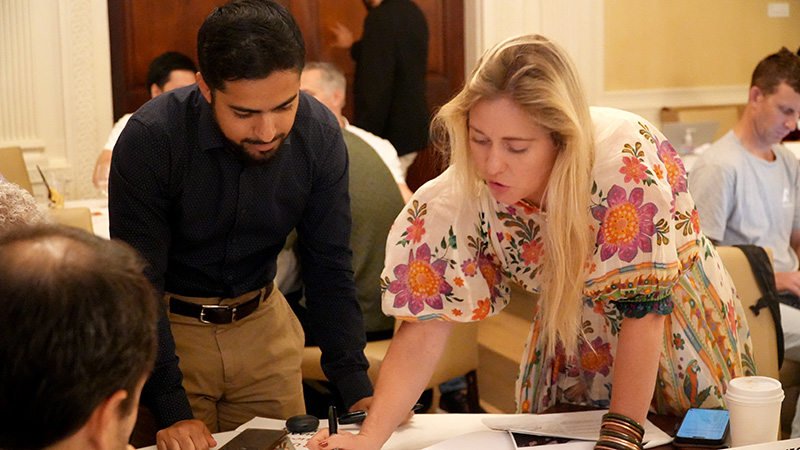
  • The “learning laboratory” — where the global group of participants brings their own projects into the classroom for group discussion and feedback and emerges with unexpected insights.
  • In-depth learning exercises that are not only instructive but also have elements of gameplay and interactivity — informed by Steve’s renowned ability to make learning fun.

What to Expect
When Florida’s Walt Disney World opened in 1971, NBC’s David Brinkley called it “the most imaginative and effective piece of urban planning in America.” This in-depth program, taught by a 30+ year veteran of theme park design with Disney and Universal Creative, demonstrates how to import the practices from designing theme parks into the discipline of placemaking.

You will hone your architectural narrative sensibilities through concrete examples from theme park design, architecture, and real estate development, further strengthened through classroom discussion, practice pitch sessions, and in-depth exercises.

The program will consist of three modules, featuring a mix of lectures, interactive discussions, and exercises that enable you to immediately apply what you’ve learned, while learning from a global group of peers.

  • The first session, “Telling”, focuses on how to distill a project’s emotional core into an easily communicated form, called a log line.
  • The second session, “Selling”, centers on the mechanics of pitching your project, with a focus on stakeholder analysis and leading your pitch with a compelling vision, not facts.
  • The third session, “Gelling”, brings it all together, sharing how to sustain the telling and selling of your project’s story from groundbreaking through significant milestones, including completion, lease-up, and more.

Participants are encouraged to select a project they are involved in to share as a reference point for the learning and group sharing in this program.

  • Learn five fundamental principles of entertainment architecture.
  • Practice reframing your project into an emotionally engaging story by adapting the practices of theme park design.
  • Reframe your thinking from being investor-focused to user-focused because the user is the one who is funding your project.
  • Understand the role of marketing data in analyzing what is essential to your potential user.
  • Acquire the skills to tell distinct, memorable stories.
  • Grow as a leader by becoming a better storyteller.
  • This includes all real estate professionals and designers engaged in making places.
  • This program is for anyone interested in placemaking as a storytelling discipline. 
  • This program does not require previous design experience or ability.

We recommend anyone signing up for this program watch Ole Sceeren’s Ted Talk “Why great architecture should tell a story”:

You might suppose that entertainment architecture is the architecture of theaters and amusement parks, and structures exclusively designed by theme park architects. However, the term entertainment architecture can refer to any building or structure, regardless of its location and function, provided that it is designed to stimulate the imagination and encourage fantasy and whimsy. 

Some works of entertainment architecture are playful recreations of famous monuments. Some feature enormous statues and fountains. Entertainment architecture is often considered postmodern because it uses familiar shapes and details in unexpected ways.

Source: ThoughtCo.

Instructor


Headshot of Steve Tatham

Steve Tatham

Chief Creative Officer, MDSX

Steve Introduces the Program

Participant Feedback on Steve Tatham’s On Campus Teaching

Amazing and super creative class. Enlighted everybody.

Very engaging. Great presentation of a fresh perspective for real estate. Really enjoyed this.

I thoroughly enjoyed and was engaged by the depth and breadth of the presentation. Steve is an exciting speaker.

Probably our best class. Dynamic presentations and class interaction. It was FUN.

It is always a pleasure to have Tatham as an instructor. Great Class!

Story Building: Secrets of Narrative Placemaking and Design from Entertainment Architecture – Campus

May 19-20, 2026 | 9:00am – 5:00pm Eastern

Harvard University Campus
Tuition: $1,850 (through March 31), $2,050
CEUs: Pending
AMDP Elective Units: 2

Program size is limited and early registration is recommended.

Discounts & Deadlines

Please email us at [email protected] with any questions and to ask about group signup.

Registration Deadline: 24 hours before the start of the program.

Full Discount and Cancellation Policies